



When to be tested
Metastatic breast cancer (mBC) changes over time and throughout treatment.1,2
As ESR1 mutations emerge due to previous treatment with endocrine therapy for mBC,2 a test for ESR1 mutations should be performed at each disease progression if not detected previously.3,4
How to be tested

Blood test (liquid biopsy)
ESR1 mutations can be detected in circulating tumor DNA released from cancer cells into the bloodstream.4-8

Tissue biopsy (fresh)
A fresh tissue biopsy can also be used to detect ESR1 mutations.4-7

Archival tissue
Primary archival breast cancer tissue should not be used as a source of tumor tissue for ESR1 mutation testing, as ESR1 mutations aren’t likely to be found in archival tissue.4,7,9
Liquid biopsy is considered the preferred testing methodology to detect ESR1 mutations.7
A blood test (liquid biopsy) is minimally invasive, highly sensitive, can be collected quickly, and can be performed at each progression.4,5,9
Testing procedure
DNA extraction
DNA is extracted from the blood or fresh tissue sample.5,9
ESR1 mutation test
DNA is analyzed to detect the presence or absence of ESR1 mutations.5,9
ESR1 testing provides a rapid positive or negative result.5
Importance of regular testing
As mBC changes over time and throughout treatment, it is important to test for specific biomarkers such as ESR1 mutations:2
- Every time the cancer progresses
- Before a new treatment is initiated
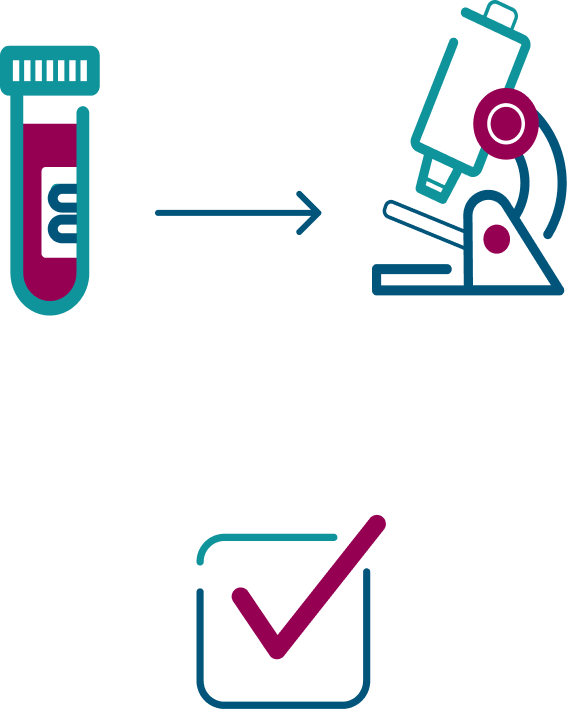
How a liquid biopsy is performed9
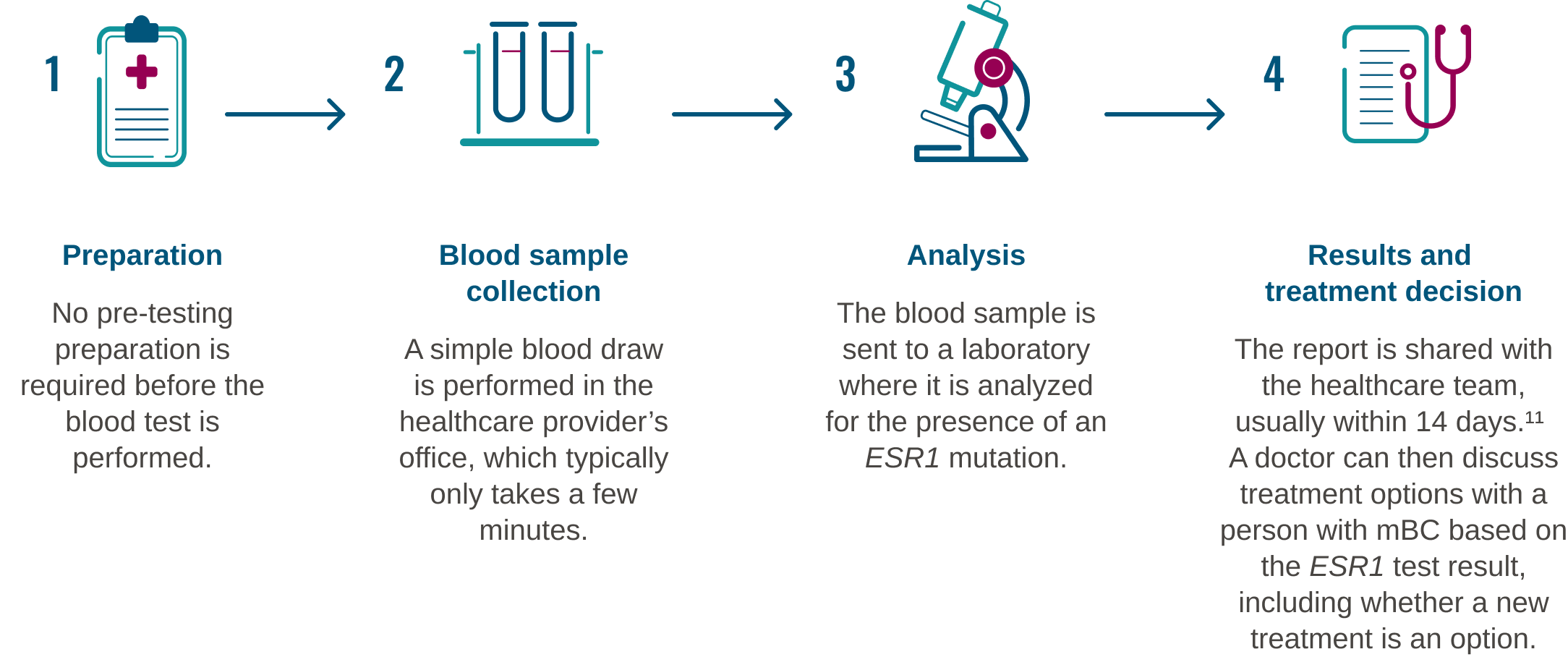
ESR1: estrogen receptor 1; mBC: metastatic breast cancer.
- Brett JO, et al. Breast Cancer Res. 2021;23(1):85.
- Allouchery V, et al. Breast Cancer Res. 2018;20(1):40.
- Russano M, et al. J Exp Clin Cancer Res. 2020;39(1):95.
- Jeselsohn R, et al. Nat Rev Clin Oncol. 2015;12(10):373–83.
- Lone SN, et al. Mol Cancer. 2022;21(1):79.
- ESMO Metastatic Breast Cancer Living Guideline, v1.2 April 2025. Accessed March 2026. Available at: https://www.esmo.org/guidelines/living-guidelines/esmo-living-guideline-metastatic-breast-cancer.
- Burstein HJ, et al. J Clin Oncol. 2023;41(18):3423–5.
- Referenced with permission from the NCCN Clinical Practice Guidelines in Oncology (NCCN Guidelines®) for Breast Cancer V1.2026. ©National Comprehensive Cancer Network, Inc. 2026. All right reserved. Accessed March 2026. To view the most recent and complete version of the guideline, visit NCCN.org. NCCN makes no warranties of any kind whatsoever regarding their content, use or application and disclaims any responsibility for their application or use in any way.
- Franken A, et al. J Mol Diagn. 2020;22(1):111–21.
- National Cancer Institute. Biomarker testing for cancer treatment. Accessed March 2026. Available at: https://www.cancer.gov/about-cancer/treatment/types/biomarker-testing-cancer-treatment.
- Lee Y, et al. JCO Precis Oncol. 2020:4:PO.20.00121.