



For ESR1 mutation testing…
…multidisciplinary collaboration is crucial
Well-aligned testing initiator–lab relationships are important for best patient care.

…various highly sensitive techniques are available
dPCR and NGS techniques are mainly used to analyzeanalyse samples.1-3
…multidisciplinary collaboration is crucial
Well-aligned testing initiator–lab relationships are important for best patient care.
…various highly sensitive techniques are available
dPCR and NGS techniques are mainly used to analyzeanalyse samples.1-3
ESR1 mutation testing workflow

1. Patient visit
To aid in treatment selection, routine testing for the emergence of ESR1 mutations at progression on endocrine therapy (ET) in patients with ER+/HER2- advanced/metastatic breast cancer (a/mBC) is recommended.4-6

2. <i>ESR1</i> mutation testing
The healthcare team initiates the testing procedure by taking a sample and sending it to a diagnostic lab for analysis.
Samples can be obtained via liquid biopsy or fresh tissue biopsy.4-6

3. Laboratory analysis
In the diagnostic lab, the samples are tested for specific biomarkers, like ESR1.
- Sample preparation: The DNA is extracted and the samples are prepared for analysis.
- Sample analysis: Samples are mainly analyzedanalysed by two methods: next generation sequencing (NGS) or digital polymerase chain reaction (dPCR).1-3
- Results and report: The test results are summarizedsummarised in a diagnostic report and sent to the healthcare team.

4. Reporting
Aim to report results within 14 days of sample receipt.7
*Fresh tissue biopsy testing is not reimbursed in the UK.
dPCR and NGS techniques
Overview of dPCR and NGS techniques1-3
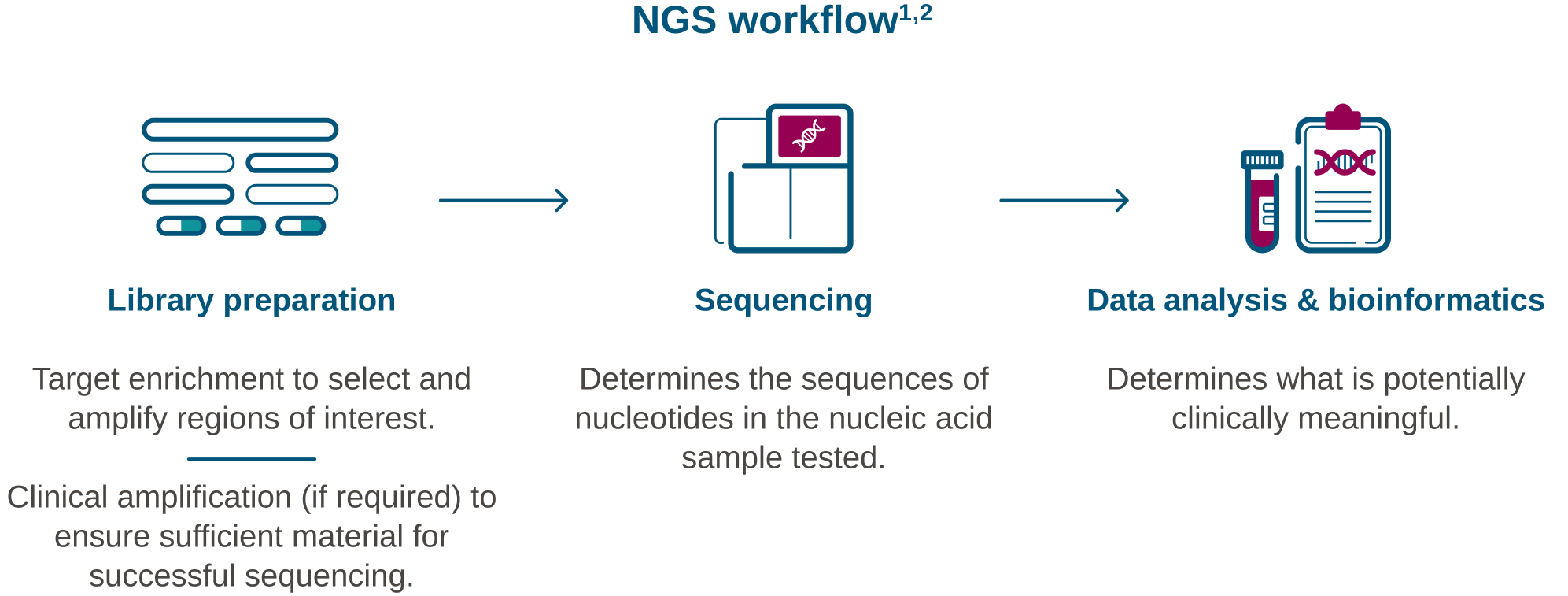
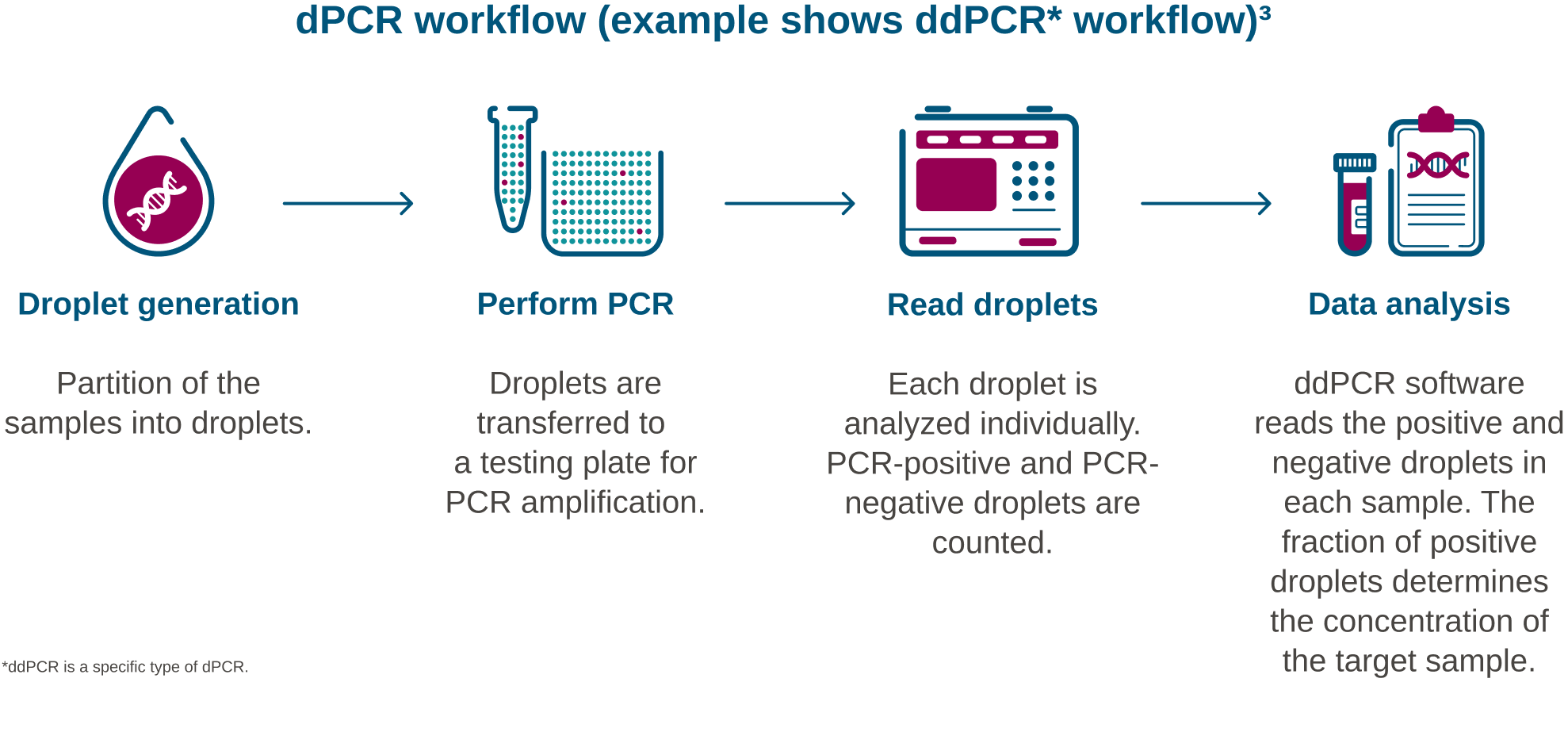
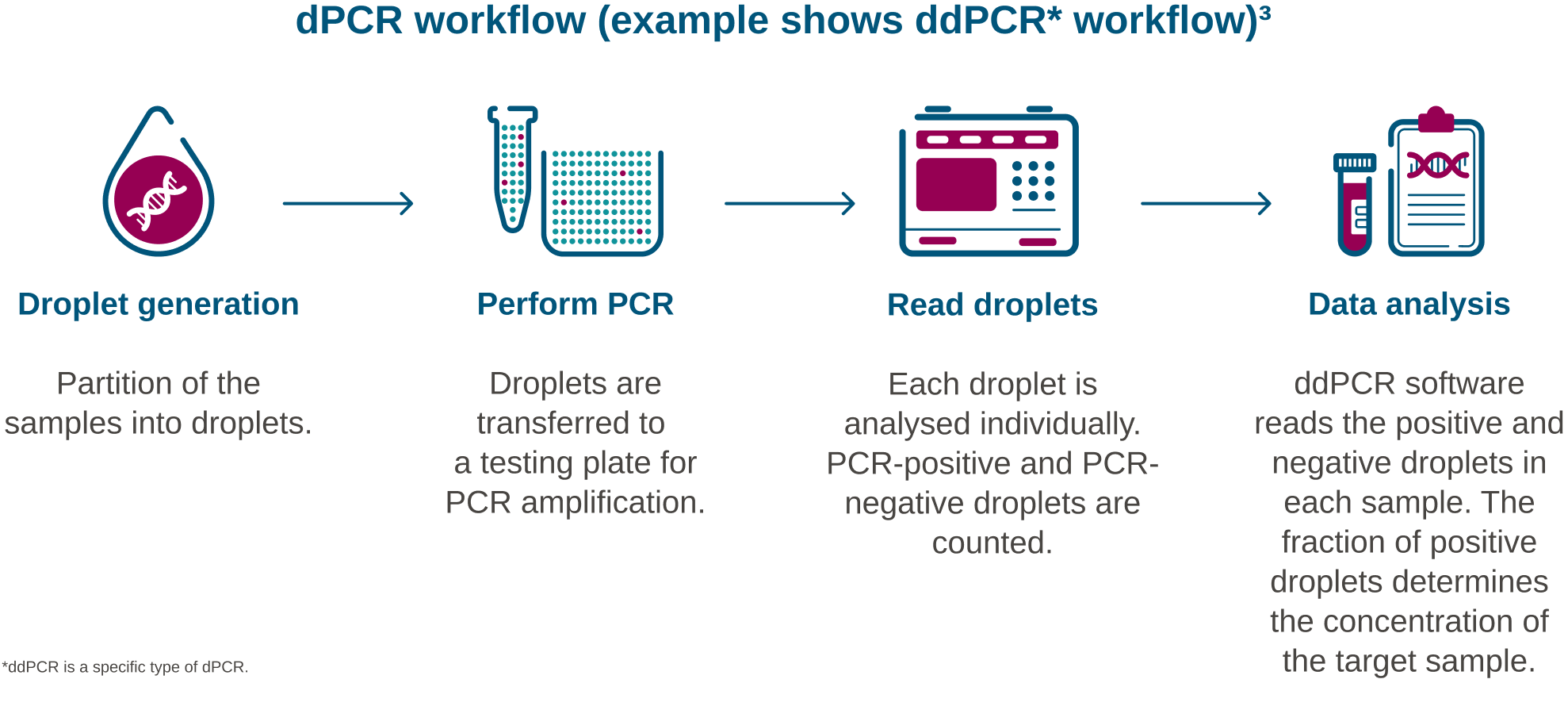
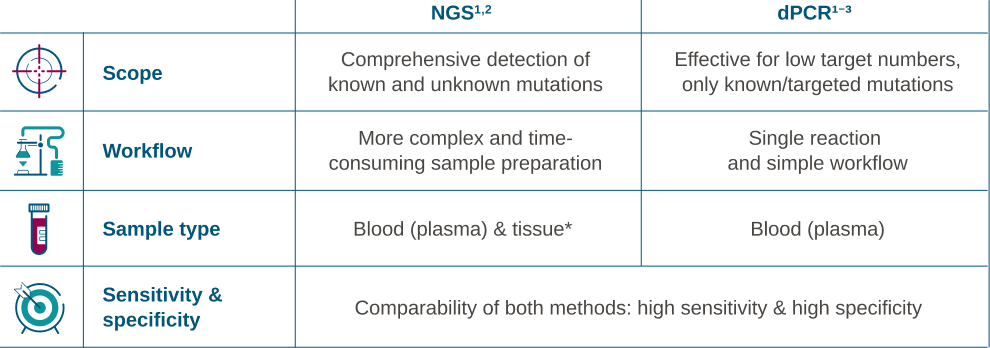
*Fresh tissue biopsy testing is not reimbursed in the UK.
Scientific evidence for NGS and ddPCR* techniques
Several published studies demonstrate concordance between NGS and ddPCR when testing for ESR1 mutations:
In a pooled meta-analysis with 16 trials (4 RCTs and 12 cohort trials), no significant difference in ESR1 mutation incidence was detected between ddPCR and NGS techniques (P=0.15).1


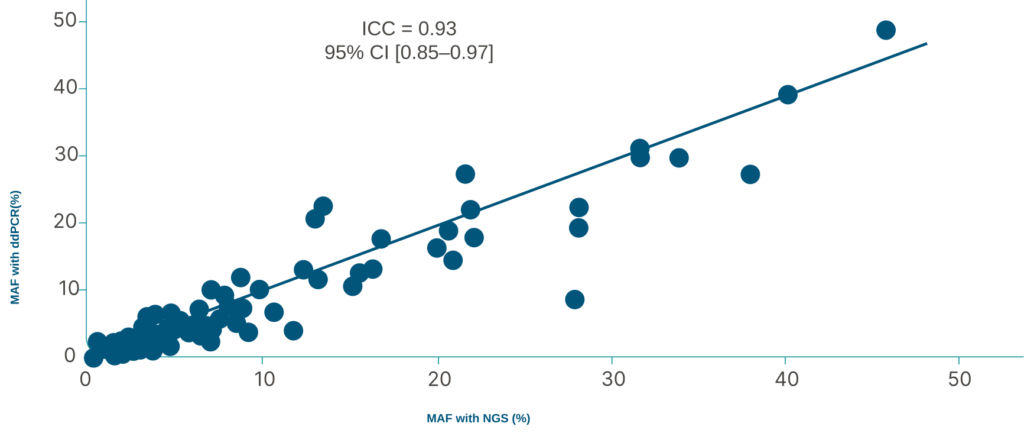
Excellent intraclass correlation coefficient (ICC=0.93) between ddPCR and NGS for activating blood ESR1 mutation variant allele frequency (VAF; also referred to as mutant allele frequency, MAF, in scientific literature) in these samples.
*ddPCR (a specific type of dPCR) was the analysis technique used in this reference.
Adapted from Callens C, et al, 2022.8
<i>ESR1</i> mutation reporting
Liquid biopsies are used for genomic analysis and to identify mutations9,10
It is becoming increasingly common for oncologists to use liquid biopsies for genomic analysis. This approach is successful because a fraction of the extracellular DNA in the blood is shed from tumour tissue.9
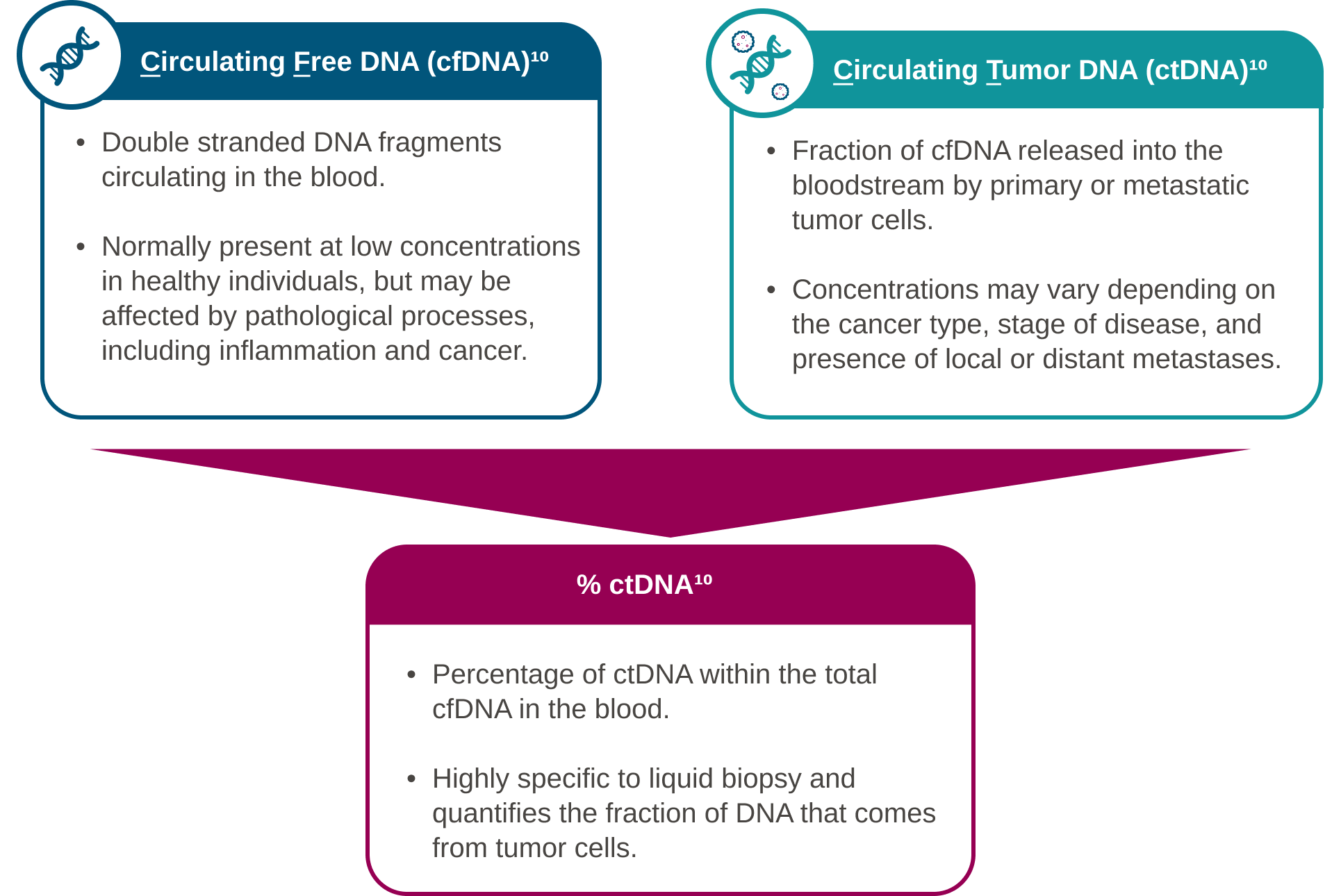
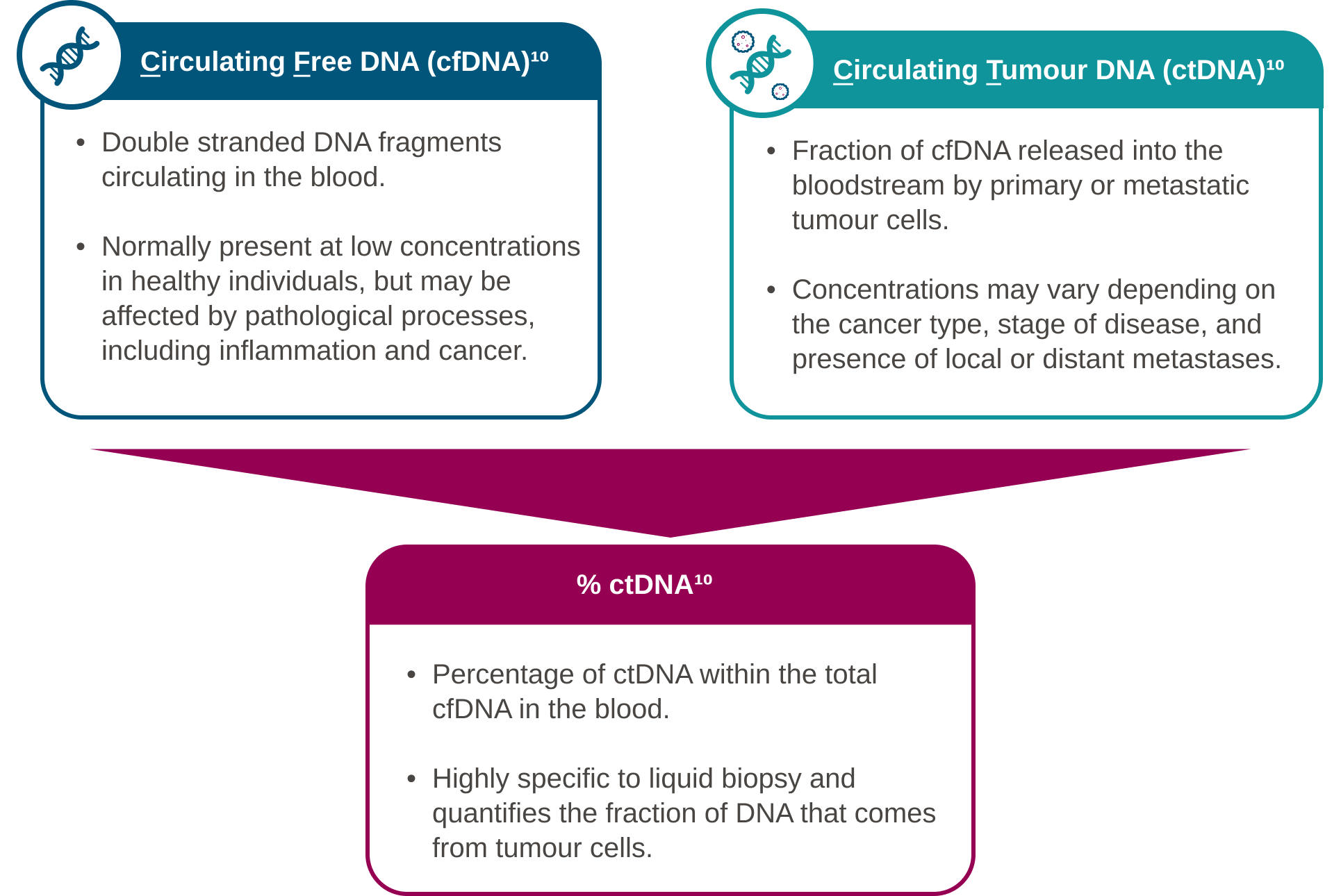
ctDNA in the blood is shed from tumour tissue and can be analyzedanalysed using NGS and dPCR methods to identify actionable mutations.10
How are mutations like ESR1 reported from ctDNA in liquid biopsies?
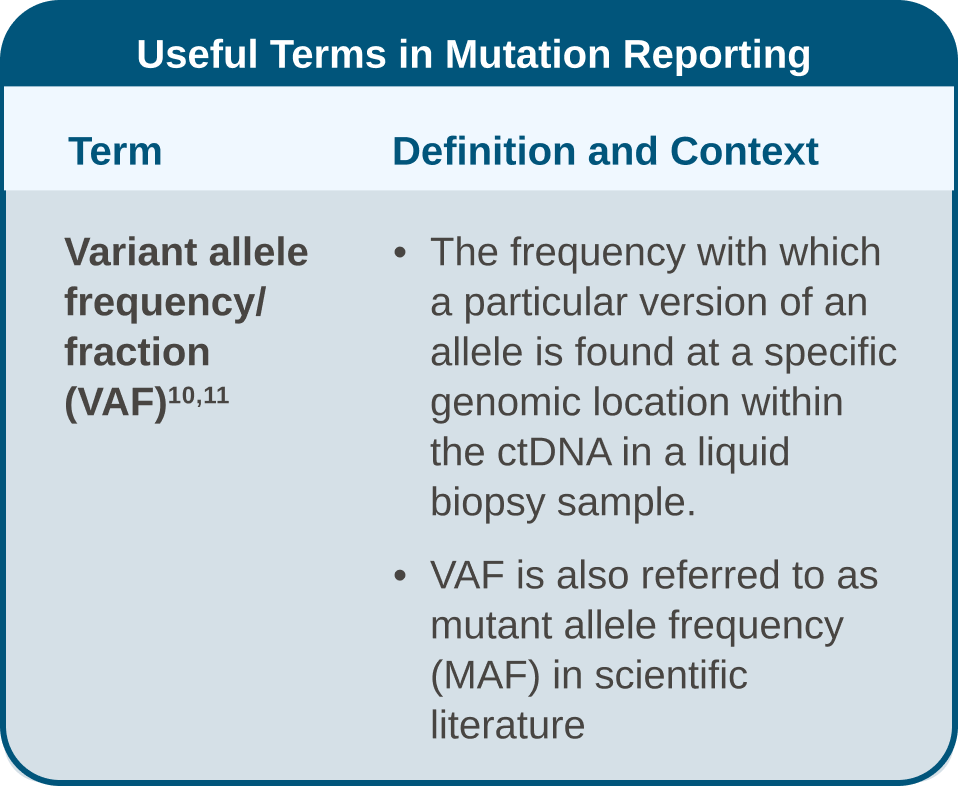
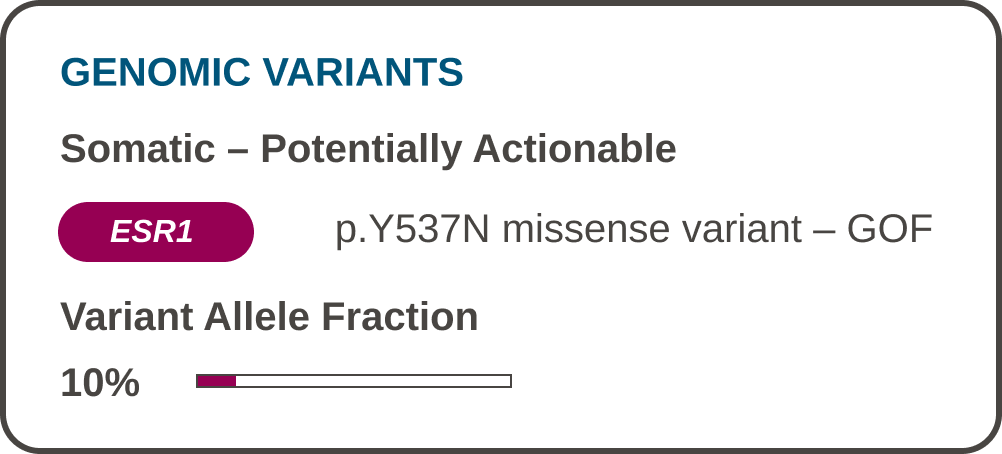
Variant allele frequency (VAF; also known as variant allele fraction) is a measure used to represent the fraction of alleles carrying a specific genomic alteration, as determined by NGS or dPCR.10
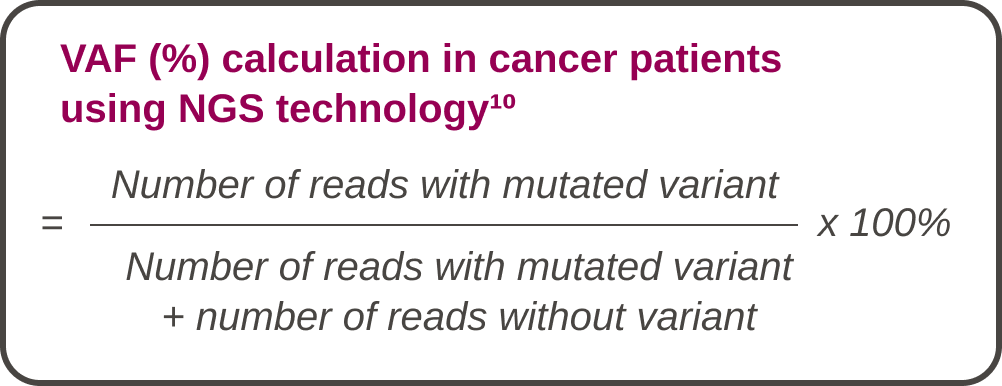
Sample Report12
Breast Cancer Patient
ALLELE: a version of a DNA sequence at a specific genomic location. Humans normally have 2 alleles at each genomic location, except in male sex chromosomes.13
READ: DNA sequence from a fragment or section of DNA.14
Tumour fraction may be assessed in liquid biopsies for quality control9,15,16
Tumour fraction (TF) is occasionally reported for liquid biopsies as a quality control measure to assess whether a sample has a sufficient quantity of ctDNA for detecting alterations in solid tumours.15

Tumour Fraction9,10,15,16
The percentage of DNA in blood that originates from tumour
- Represents the total proportion of cfDNA in a sample that is tumour derived and is not specific to DNA carrying a particular target mutation.
- Often used interchangeably with % ctDNA in the context of liquid biopsies.
- May be used more broadly to refer to the proportion of any tumour-derived material in the sample, which includes, but is not limited to, DNA.

TF as a QC Measure9,15,16
Low TFs result in higher false negative rates, particularly with low VAF mutations
- TF informs the likelihood of detecting a tumour mutation in plasma.
- Generally, when a liquid biopsy sample reaches the 1% threshold, it is referred to as a high ctDNA TF.
- Oncologists can be more confident in any negative results with a high ctDNA TF.
Low TF and a negative ctDNA test result may require repeat testing using an alternative methodology16
a/mBC: advanced/metastatic breast cancer; cfDNA: circulating free DNA; ctDNA: circulating tumour DNA; DNA: deoxyribonucleic acid; ddPCR: droplet dPCR; dPCR: digital PCR; ER+/HER2-: oestrogen receptor-positive, human epidermal growth factor receptor 2-negative; ESR1: oestrogen receptor 1; ET: endocrine therapy; GOF: gain of function; ICC: intraclass correlation coefficient; LOD: limit of detection; MAF: mutant allele frequency; NGS: next generation sequencing; PCR: polymerase chain reaction; RCT: randomizedrandomised controlled trial; TF: tumour fraction; VAF: variant allele frequency.
- Najim B, et al. Front Oncol. 2023;13:1221773.
- Garcia J, et al. Oncotarget. 2018;9(30):21122–31.
- Mattox AK, et al. Oral Oncol. 2022;128:105805.
- ESMO Metastatic Breast Cancer Living Guideline, v1.2 April 2025. Accessed March 2026. Available at: https://www.esmo.org/guidelines/living-guidelines/esmo-living-guideline-metastatic-breast-cancer.
- Burstein HJ, et al. J Clin Oncol. 2023;41(18):3423–5.
- Referenced with permission from the NCCN Clinical Practice Guidelines in Oncology (NCCN Guidelines®) for Breast Cancer Version 4.2026. ©National Comprehensive Cancer Network, Inc. 2026. All right reserved. Accessed May 2026. To view the most recent and complete version of the guideline, visit NCCN.org. NCCN makes no warranties of any kind whatsoever regarding their content, use or application and disclaims any responsibility for their application or use in any way.
- Lee Y, et al. JCO Precis Oncol. 2020:4:PO.20.00121.
- Callens C, et al. Anal Chem. 2022;94(16):6297–303.
- ctDNA Tumor Fraction Matters When Interpreting Liquid Biopsy Test Results. Foundation Medicine. April 16, 2024. Accessed March 2026. Available at https://www.foundationmedicine.com/resources/knowledge-center/ctdna-tumor-fraction-matters-when-interpreting-liquid-biopsy-test-results.
- Galant N, et al. Cancers (Basel). 2024;16(4):782.
- He MM, et al. Genome Med. 2019;11(1):53.
- Genomic profiling. Tempus. June 10, 2024. Accessed May 2026. Available at: https://www.tempus.com/oncology/genomic-profiling/.
- Allele. Genome.gov. Accessed March 2026. Available at: https://www.genome.gov/genetics-glossary/Allele.
- Read. Genomics Education Programme. May 31, 2019. Accessed May 2026. Available at https://www.genomicseducation.hee.nhs.uk/glossary/read/.
- Rolfo CD, et al. Clin Cancer Res. 2024;30(11):2452–60.
- Tsui DWY, et al. Genome Med. 2021;13(1):96.